Buying a Boat Sight Unseen?

Part II-The Fog Begins to Lift.
Brand Banks 32 in Anacortes

In Part I we discussed deciding to buy a boat and ultimately how we got to buying one we had not seen. We pick it up here with taking delivery-the first time we were able to step onto our “new” boat.

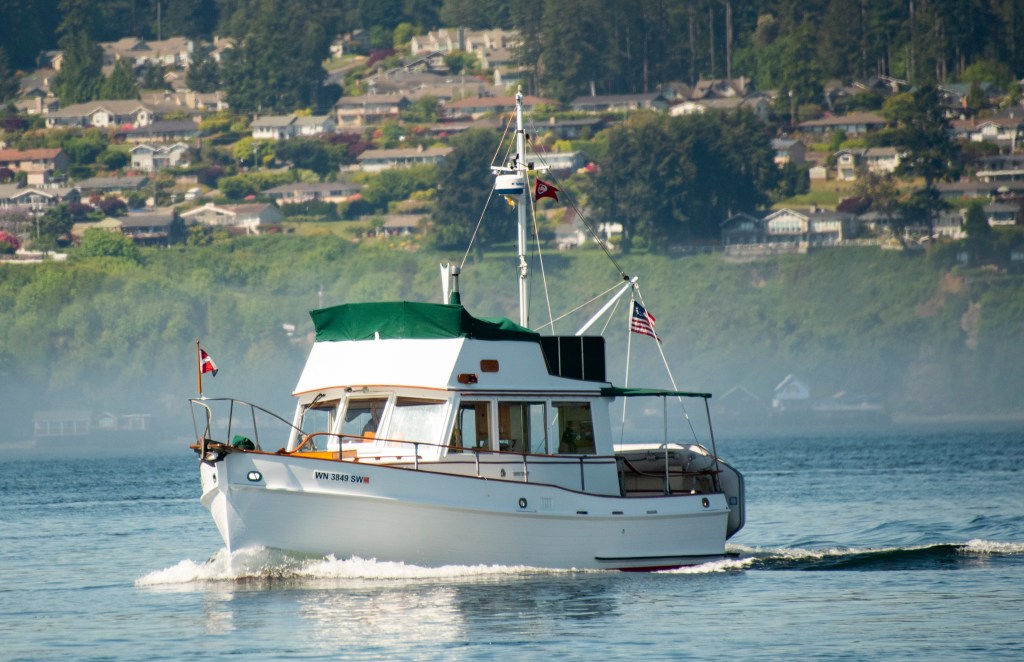
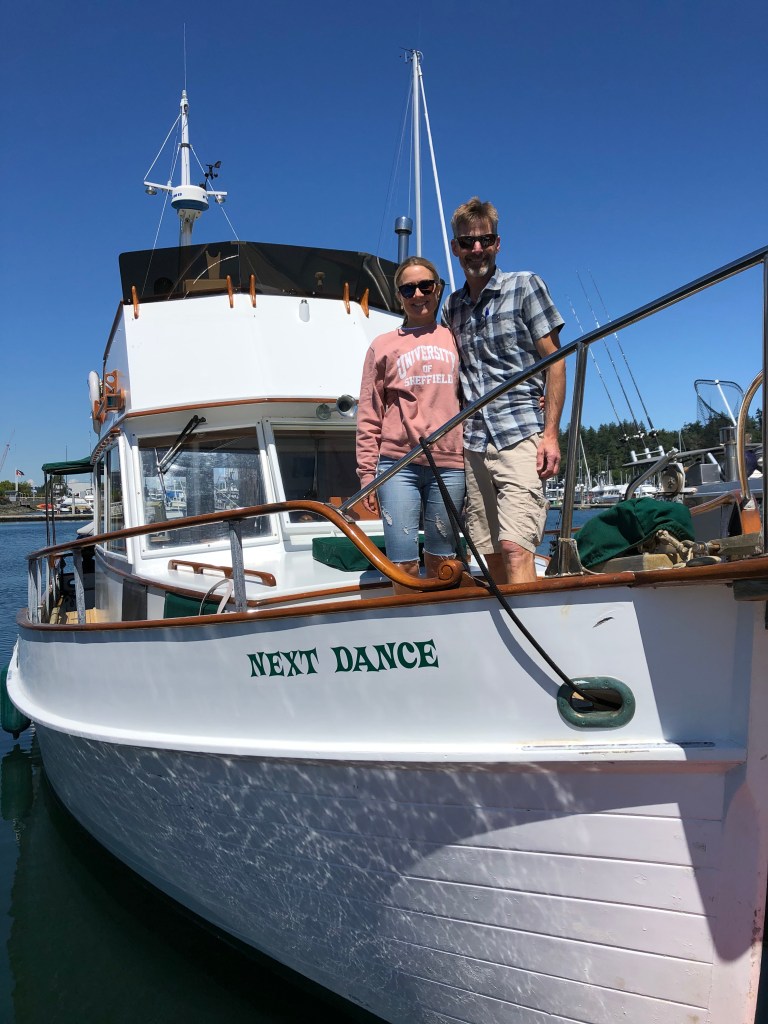
 On a sunny mid-July day of 2020, Julie and I hopped in our truck along with our two daughters and headed to Anacortes WA, a small waterfront town in the Northern part of Washington state. Shawn was bringing the boat from Sidney BC and would meet us there. The plan was that he would then step into a chase boat and head back to Canada. Once we arrived, Shawn gave us a quick overview of the operation of our new boat, “Next Dance” and departed. At this point, there was no going back. The paperwork was completed, money transferred and we were committed. So, we loaded up a few supplies, waved goodbye to our daughters who would run the truck back home and we fired up the motor. The run from Anacortes back to our marina in Des Moines (small waterfront town South of Seattle) is approximately 77 nautical miles which at our hull speed of 7 knots is about 11 hours (depending on currents etc.). We were leaving Anacortes late in the afternoon and I was not feeling like running at night with a boat I was not familiar with. This turned out to be wise, the next day we lost all electronics, including radar, just north of Elliott Bay, Seattle’s busy commercial port. Instead, we decided to stop in La Connor along the Swinomish channel, a short cruise of just a couple hours.

Once tied up in La Connor the emotional pendulum began its first swing… I was prepared for this, but much like jumping into the Puget Sound, even though you know its cold-it’s still cold. Thus began the second guessing, the doubting, the sackcloth and ashes, the critical eye looking for any and all flaws.  I spent a somewhat sleepless night (Julie didn’t seem to share my concerns or sleeplessness- was she not paying attention?) Oddly enough, the sun still rose the next day and with it, the pendulum began its swing back in the other direction. Underway by 5:30am to catch the current, we began a pleasant run down to our home port of Des Moines. The water was relatively calm, the sun warm and we enjoyed sitting on the flybridge soaking up the warmth.  This was what the trawler lifestyle is all about! Even,  losing all the electronics couldn’t dampen my pendulum swing. By mid-afternoon we arrived in Des Moines and our little shakedown cruise was over.

I did some initial clean up, tracked down the loose ground wire to bring the electronics back to life and we used the boat for the rest of the season while I compiled a list of winter projects. After a final trip to the San Juan Islands in September, I buckled down to an average of 30 hours a week of work from October through April of 2021. My list of completed projects, big and small, is lengthy and I have another list for this winter. However, this fits my system well. Use the boat all season and work on it all winter. This is how I get 12 months of enjoyment out of my boats in the PNW.

Would I buy a boat again without seeing it in person? My answer? Maybe. Certainly not if we could not have seen other boats of the same model to get a feel for layout. Many of the boats in the old boat world are one-offs and you don’t have the luxury of being able to see essentially identical boats. Also, with such a strong production run (861 built with almost no change to layout) there were plenty of people to talk to about their experience with the GB32. I’ve never found anyone who speaks negatively about the design. I also had plenty of input about the wood GB’s, where the weaknesses are and what to look for, so far that has tracked right along as expected.  Now would I recommend it for another person? My answer, depends on the person…but probably not. I don’t want the guilt of a recommendation gone wrong.

Buying a Boat Sight Unseen?

cruising in the fog

Buying a boat sight unseen is a bit like looking through the fog for your destination. You can’t really see anything until you get there. Once we had made the hard decision to end our relationship with Jonta and confirmed that the Grand Banks 32 was the model we wanted, it was time to buckle down to boat buying. It was time to start calling brokers or owners, and start driving and looking at boats which, you could argue, is the best part of buying a boat.  You have not had to spend any money yet and the anticipation of the as-yet-unknown, new-to-you boat is a bit delicious.

Almost immediately in our search I saw a possibility pop up in Sidney, BC in Canada listed with Grand Yachts (see note at the bottom re: Grand Yachts). The boat appeared well cared for and had a solid list of system upgrades. Even though it was in BC, I called anyway and spoke with Shawn Francis, the broker handling the sale. While the boat sounded promising, we could not get into BC with the border closed (Covid restrictions), and there were a few other boats in our area I wanted to look at. So, I ultimately left it with Shawn that I would continue my search and we agreed to stay in touch.

Shortly after that call, the boat went “pending” and I crossed it off the list. Some of the 32’s available I ruled out simply from their description online. If they had high engine hours or looked pretty rough around the edges I set them aside. The other thing I found interesting was how hard it was to get some brokers to return a phone call about boats they had listed. I literally chased one broker for three weeks to get a return call. Our search continued, but we were nearing the end of what was currently on the market. The 32 is a popular model and Covid added an influx of social-distance-seeking buyers who were rapidly drying up the inventory. However, it was June and boating season was starting; we weren’t going to sell Jonta until we had purchased another boat. There was little pressure to make a decision we didn’t feel confident in.

At this point I received an email from Shawn at Grand Yachts letting me know that his buyer had declined to move forward after he had done his mechanical and structural inspections. While there were no major problems noted, there was a list of deferred maintenance that the buyer did not want to deal with–he wanted to go cruising now! We still had the problem of a closed border so we did a walk thru via facetime. Buying a fifty-year-old boat essentially “site unseen” is not for the faint of heart and I would not recommend it for most people, but I figured a little risk never hurts and it keeps the heart rate up. So with a thumbs up from my wife, we made an offer (contingent on inspections) which was accepted. And to be honest, I figured there was enough pressure in the boating market that I could resell at a minor loss if need be.  

With our offer accepted, I was then able to buy the inspections from the previous buyer at about a quarter the cost. As mentioned before they showed a list of deferred maintenance but most of that was in the wood, paint, and varnish category, which I can handle. I have built, rebuilt and worked on wooden boats (hobby only) for years and I knew I would find some more issues as I went along. But I have learned that viewing the boat in person would not necessarily expose them. Only getting to know the boat over time would do that.

We crossed out fingers, removed our inspection contingencies and took the plunge…

Next week Part II-The Fog Begins to Lift.

Note on Grand Yachts, Port of Sidney office: I cannot say enough about the quality of service we received from Shawn Francis who works out of the Port of Sidney office. He was endlessly patient and tirelessly professional. If you ever had a chance to work with him and the office that supports him, you won’t be disappointed.

Heading toward Fall…and a List of Winter Boat Projects

I am never sure how I feel about Fall. On the downside, it’s the end of the summer boating season. On the other hand, it’s the transitional time to start gearing up for the big winter boat projects. For me, this is the way I get twelve months of enjoyment out of a boat: spring and summer cruising and fall and winter boat projects. Some folks button up the boat and head off to home and hearth. You can find me all winter long with tools in hand. Winter boat work is the best.

This summer we here in the PNW had an amazing summer of cruising. Countless warm days (and a few smokin’ hot ones by our standards) mostly calm, flat water and, in my case, enough time this year to go out and enjoy it. The weather cooled a bit in the first half of September but we were able to enjoy a mostly dry, calm trip to the San Juans for a couple of weeks. The Dickinson diesel stove, after taking the summer off, ran continuously to ward off the chilly mornings and cool evenings. Some years we even get a bonus of great weather thru September and into October, but not this year. We returned from the San Juans mid-September and the weather switched to rain, wind and occasionally, sun.  Unfortunately, the few good days conflicted with already booked “other” events.

This Fall I’ve been picking off small projects that can be done in a day or less. Most of those are maintenance related after putting a lot of hours on the boat over the summer. At the same time I started mapping out the winter work. Some years, I’ve been able to keep the boat ready to go all winter in case we get a good day to get out on the water. This winter I have bigger projects and the boat will be out of service for quite some time. Last winter was similar. The projects started mid-October and I didn’t finish until the end of April. Typically, I wait until November 1 to start, just in case October offers up some nice cruising days. Year round, I keep a running list of projects, divided up under Spring Haulout, Winter Projects and Completed. The completed section is just so I can look back and remind myself that I’m moving forward. Sometimes I need that about mid-winter when it seems like progress is some nautical version of Bill Murray’s Groundhog Day.

This year I dug the list out in late September and prioritized the projects. Supply chain problems this year had to be considered so I did order some items right away but most of what I have going this year is wood repair in the deck and cabin, along with plenty of painting which is mostly my labor. (See “Todd’s Boats” page and look for “Grandy” for some background on the current boat). So as the rain comes down and the days get shorter, I’ll start to dig into this year’s projects. I will keep you posted…

Why Own a Wood Boat?

Growing up on the waters of the Puget Sound and surrounding lakes left me with the firm belief I need to be on the water as much as possible. And to my way of thinking that means having a wood boat…or two. And judging from the number of boats in our area, plenty of other folks agree with me. But why choose a wood boat?

The Common wood boat question… or is it really a question?

Any wooden boat owner knows the most common question from folks is “Isn’t it a lot of work?” Now I believe this question is really more of a rhetorical statement with a variety of meanings such as “You are an idiot” or “You are a strange, strange person.” I used to try to rebut the question, since it isn’t so much the wood that causes the work as they age. Old stuff wears out, end of story.  Those with “Fiberglassics” can attest to spending as much time on their fiberglass boats as we wood folks do. And oddly enough, I never hear anyone questioning the sanity of people who buy older homes built of wood.

The better wood boat question

Very rarely, someone asks a different question that actually seems to want an answer “Why wood?”.  You will probably get a different answer from each wood boat owner you ask. For some it is nostalgia, for some it is the history, for some it is the uniqueness, for some it is the community and for some, like me, it is to work on them. Now these are not the only reasons, but I believe most people fall into these categories and most fall into all of these in varying degrees. Let’s break them down a bit.

Can a wood boat create nostalgia? First, what is nostalgia? A quick internet search gives you this definition: A bittersweet longing for things, persons, or situations of the past. Now if there is bitterness involved then would a person really want to be part of that? Probably not, but if there is sweetness, then certainly. I fall into the “sweet” camp. I enjoy the feeling of longing for the past and it does not need to be my past, just a past that I find interesting. Some are definitely trying to recreate their youth but others are just trying to create an environment or experience  from yesteryear that they think they might enjoy.

What about wood boat history? This could be interest in a specific boat or a boat builder or both. When we bought Jonta I became very interested in the builder Grandy Boat Co. This was a local (Seattle) builder that started operations in 1922 on Seattle’s Lake Union and closed down in 1967. I spent hours digging through the internet, interviewing past employees and even created a website (with help! But now discontinued) to record what I had found. For anyone who enjoys a mystery, or some nautical archeology this is a great way to spend the winter months.  Imagine tracking down as much information as you can about the owners, builder and history of a specific boat built decades ago. It could keep your sleuthing gene occupied for hours and hours.

What is unique about a wood boat? To start, there are a limited amount. While new wood boats are being built, it is a tiny percentage of all news boats each year. Plus many of the older boats were of limited production. It is not uncommon to find a boat that had a production run of one or boats built by a small to medium size builder that only produced a handful. Now for sure there were some builders that built a large number of boats, such as Chris Craft, Lyman, Grand Banks to name a few, and these tend to have large dedicated, followings. But I think the biggest factor to a wood boat’s uniqueness is that if something happens to it and it is destroyed, there is no replacement. Most of the physical items in our lives if they are destroyed, we can just get another one. Those items we cannot replace are the items we tend to value the most.

The wood boat community:

Communities grow up around all sorts of interests. People like to get together and talk about what they are interested in. Just look at the number of clubs in your community-you probably don’t know about most of them. The community around wooden boats is no different. People join in for the socializing, the resources, the opportunity to show others what you value and to know those people understand you. The wooden boat community is pretty diverse proving that you only need one thing in common to get along with someone and enjoy their company.

Finally, wood boat work:

 I suppose I could have gotten into building furniture or restoring cars which I did try once. I rebuilt a 1966 VW Karmen Ghia. Finished it, sold it immediately and last I heard it was in Belgium, which might not be far enough away. Boats give you variety, mechanical, electrical, plumbing and most importantly, wood, paint and varnish. Many people winterize and ignore their boats during the cooler months, but I get 12 months of enjoyment out of my old wood boats. I boat all spring, summer and fall and work on them all winter. Sometimes projects are pretty straightforward and other times, due to the age of the boat, you might have to do some serious digging to come up with a repair plan.   Learning how to do something new stretches you and frequently introduces you to new people and resources. The planning, organizing, implementation (and the do-overs) can be challenging, rewarding and generally great fun.

So back to the question “why wood?” My answer? I really don’t like fiberglass dust.